May 10, 2026
Doors: 7:00 PM - Show: 8:00 PM
All Ages
Bottlerocket + DLTSGDOM! present...
SLUICE
with Hiding Places
Bottlerocket Social Hall
1226 Arlington Ave, Pittsburgh, PA, 15210
Date & Time
Sunday, May 10, 2026
8:00 PM
Location
Bottlerocket Social Hall
1226 Arlington Ave, Pittsburgh, PA, 15210
SLUICE
with support from
HIDING PLACES
$18 ADV / $20 DOS
7PM DOORS / 8PM MUSIC
ALL AGES
for fans of.. Wild Pink, The War on Drugs, Andy Shauf, Ryan Davis & The Roadhouse Band
BIO:
When Justin Morris moved to New York City in 2019 after a lifetime in North Carolina, he was
planning to do the opposite of what people usually move to the city to do: give up on his dream.
Since childhood, that dream had been simple—write songs, play in bands, live inside “indie
rock.” But a run selling merch for one of the era’s biggest indie stars unsettled that conviction.
From his vantage point on the bus, the everyday grind of touring felt out of step with the
spellbinding shows; encores gave way to a working reality that showed him the job-like side of
something he’d only ever romanticized and left him wondering where the glow had gone. To his
green worldview, the gap between the fantasy of “making it” and its reality was jarring. If this
was “the dream,” he thought, maybe it needed to be reconsidered. New York was meant to be a
clean slate, maybe even the place he’d learn another trade and leave music behind. Then, less
than a day into his Bushwick sublet, a man with a gun kicked in his bedroom door, forced him to
the floor, and tied his hands with TV cables. In the days after the robbery, unable to make sense
of anything except through song, he started writing again. Those songs became the beginning
of a new project he called Sluice.
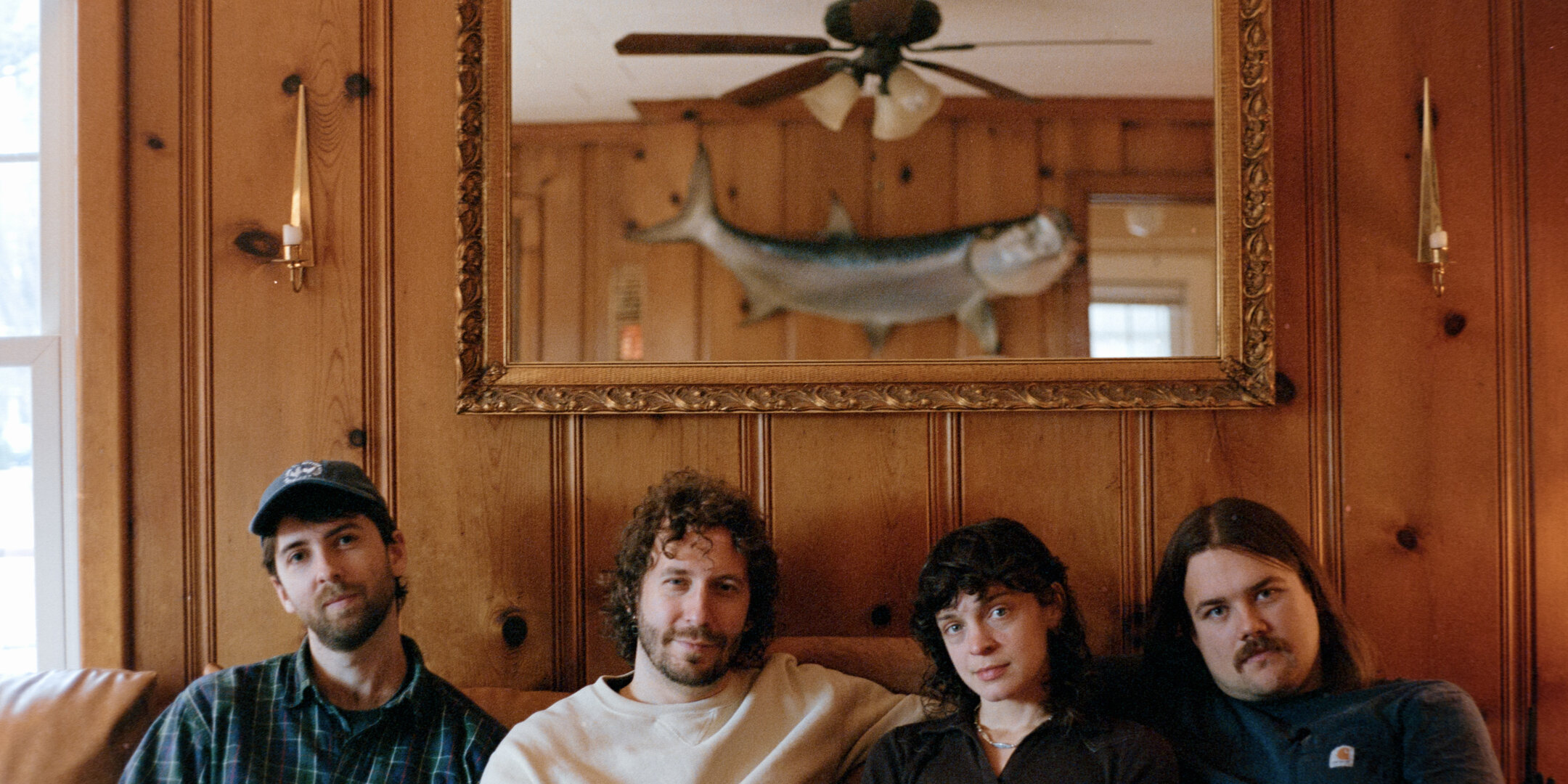
Sluice, now a four-piece band from Durham, North Carolina—with Morris on guitar and vocals,
Oliver Child-Lanning on bass and various instruments, Avery Sullivan on drums, and Libby
Rodenbough on fiddle—return with Companion, their third album and Mtn Laurel Recording Co.
debut. It follows 2023’s Radial Gate, the quietly beloved record Morris made after fleeing New
York for a Craigslist house in Hillsborough with then-stranger Child-Lanning, tracking songs at
Sylvan Esso’s studio Betty’s while working carpentry jobs and wondering, as he sings on “What
The Fuck?,” if he should do something else like “go back to school.” Radial Gate caught him
halfway out the door of music, steeped in a hermit-like loneliness of rivers, dams, and
floodgates. Instead, its release brought the dream back, but it looked different than it did to the
“kid reading in a bunk” on a tour bus, crying and asking,“what happened to it all feeling so
good?” that he sings about in “Vegas.” Companion begins where that disenchanted loneliness
leaves off. Recorded with producer/engineer Alli Rogers at Betty’s in the winter of 2024 and
slowly tended over two years, it sounds like someone deciding there may yet be a dream of
music worth struggling for—and that the point of that dream isn’t stardom or escape, but
companionship.
That struggle is written into the songs themselves.“Vegas” returns to the era he was on tour
with Angel Olsen, whose music he loved, watching the indie machine from the loading dock and
feeling, as a younger musician, quietly overwhelmed by it, before fast-forwarding to the
full-circle twist when Olsen later asked Sluice to open shows for her.
“Now I’m at the 40 Watt with my old friends,” he sings, as if the old dream and the new dream
finally collide in a joyous scream-along. Elsewhere, songs like “Torpor” and “What The Fuck” reach
back to the robbery and that period of spiritual whiplash, now re-recorded after years of being
played live to show how time can turn personal crisis into determination.
Companion is a dating record, of falling in love to the big-sky choruses of Kenny Chesney and
Alan Jackson. The “companion” shifts shape: sometimes she’s named (Sara, Bluey, Ol’ Doe
Eyes), sometimes she’s a dog slipping out the door in the morning, sometimes it’s Morris
himself catching his reflection in a bathroom mirror and muttering,
“boy, do I love you.”
Sometimes it’s the carpentry crew, the townies, the bandmates, the old tour-mates who wander
back into his life. In his matter-of-fact, without-irony lyrical style that Pitchfork once described as
“a re-education in sincerity,” these people feel real because they are. And always close at hand
is music itself, the companion that almost slipped away. Morris never lets you forget the other
possible life of hard work tugging at his sleeve—ratchet straps, pressure-treated lumber,
contractor licenses, working so hard you feel “fuzzy.” But Companion frames them now
alongside the labor of music that challenged his expectations when he was younger: committing
to the companion of music is going to be hard work.
Companion is also a healing record—a record of processing the past by returning to it with a
lyrical directness and imbuing it with religious and philosophical themes. Morris was raised
around Christianity, but Companion doesn’t preach: it wrestles with belief after disillusionment.
These themes peak in the album centerpiece “Unknowing,” a sludgy eight-minute vocoder piece
built on a prayer by Trappist monk Thomas Merton about faith without certainty. There are
biblical echoes (“my redeemer liveth”) and, accordingly, a very-Sluice line from Captain Peleg in
Moby-Dick that blends hard labor with mystery—“So you want to see the world, have a look
there over the weather bow”—reminding you the “world,” like the drudgery of a touring musician,
isn’t just postcard views but gray water and bad weather. Or, as he sings on “Gator”: “It’s parking
lots and alleyways / it’s light beer piss on couch.”
This steady, spiritually inflected sense of working on oneself––and one’s expectations––in order
to rise above and follow one’s deepest of dreams runs through everything in Companion, from
the offhand “I got back on the SSRI” in opener “Beadie” to his confession “I think about being
very wrong” in “Overhead.” In the end, Companion is the story of someone who once thought he
was done with the very thing that gave his life meaning—music—and finding it again through
the help of many companions: not as ladders to some imagined stardom, but as the thing that
walks beside you and, in turn, keeps company with anyone who hears it.