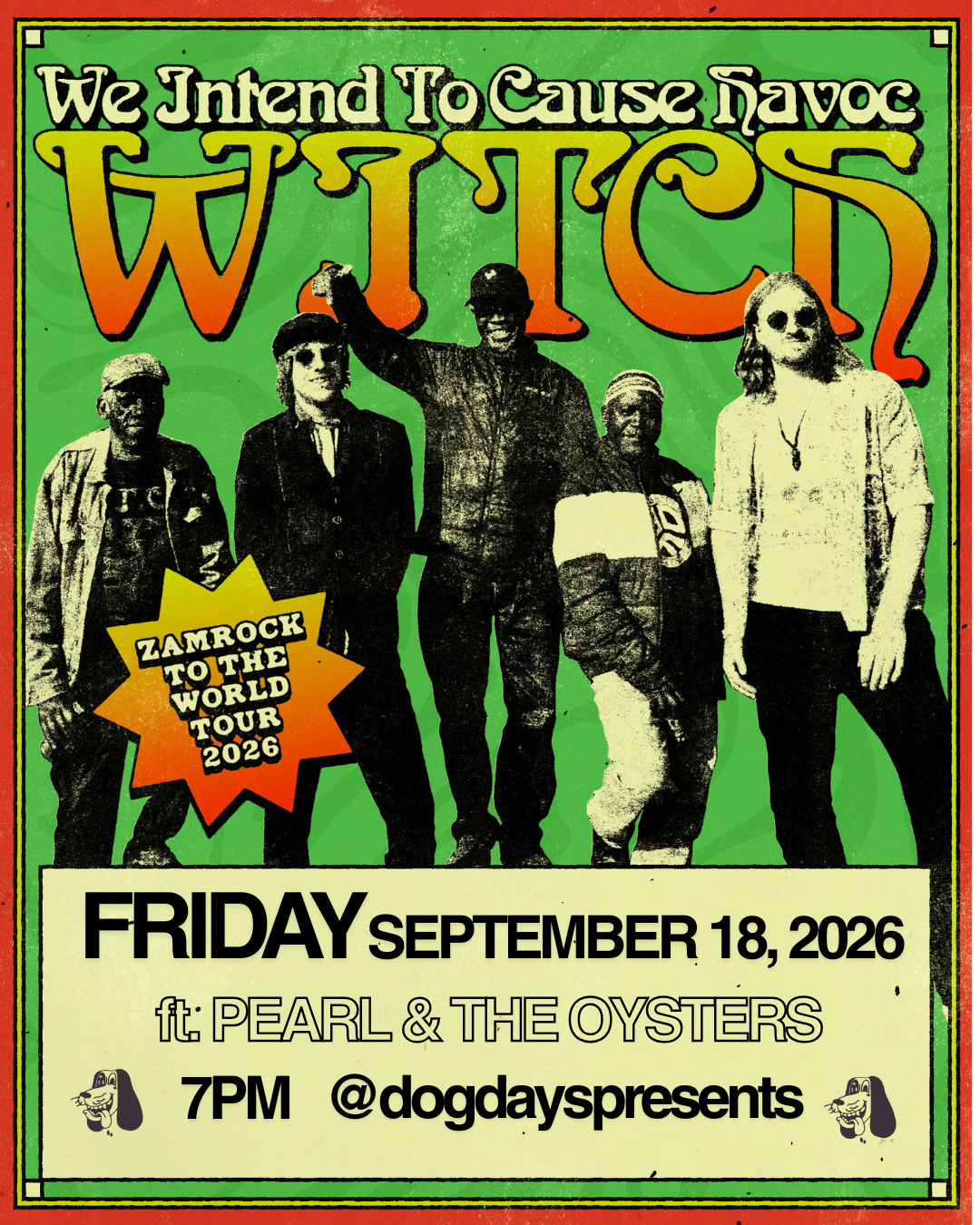
September 18, 2026
Doors: 7:00 PM - Show: 8:00 PM
All Ages
Dog Days Presents
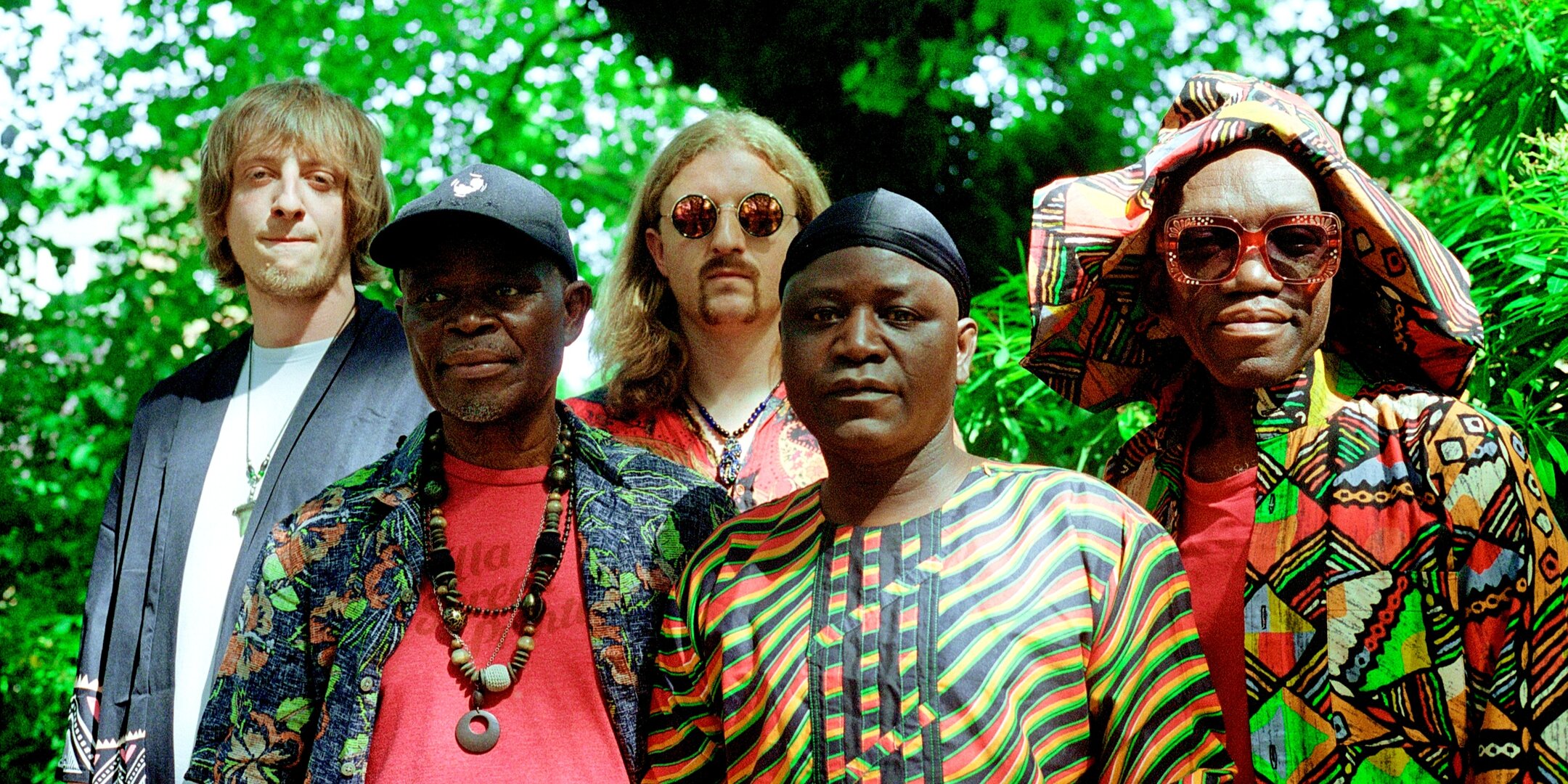
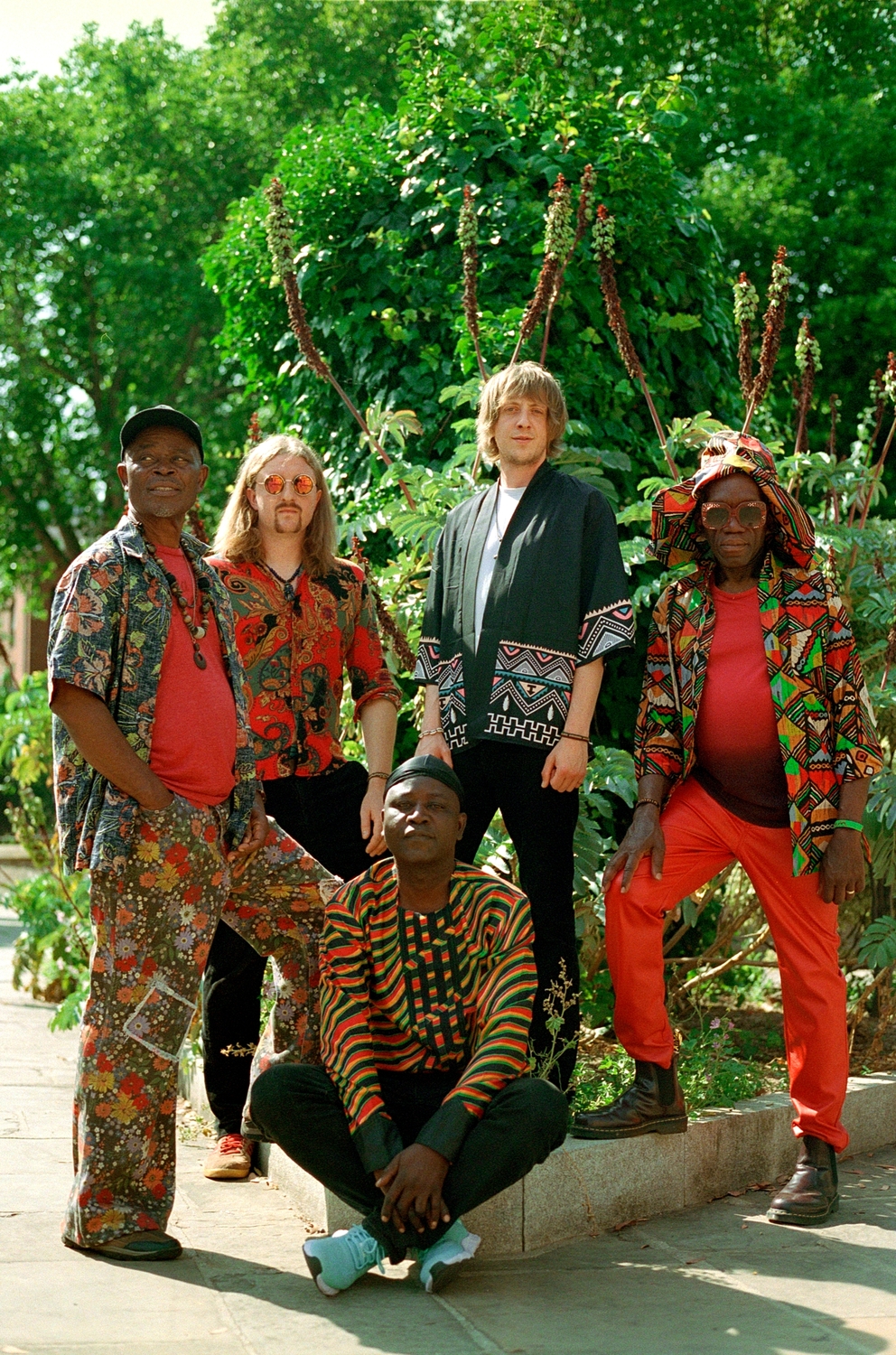
W.I.T.C.H.
with Pearl & The Oysters
Starland Yard
2411 De Soto Avenue, Savannah, GA, 31401
Date & Time
Friday, September 18, 2026
8:00 PM
Location
Starland Yard
2411 De Soto Avenue, Savannah, GA, 31401
Dog Days is proud to present.. the Zam-rock kings.. WITCH!!!!!!
The 1970s era African psych band has sustained life and remains fully active well into the 2020s.
Legends. Here in Savannah.
Also on the bill - the lovely PEARL AND THE OYSTERS! - making the finest sunshine pop you've ever heard.
About W.I.T.C.H.:
A pioneering Zambian psychedelic act, W.I.T.C.H. (the name is an acronym, standing for We
Intend to Cause Havoc) were one of the defining acts of Zamrock, a fusion of Western rock and
rhythm & blues with traditional African sounds. They were among Zambia's most popular and
influential bands in the 1970s as a wave of psychedelic and hard rock gained an audience in
Africa. A landlocked nation in the South of Africa, Zambia was formerly Northern Rhodesia until
gaining its independence in 1964, and as Zambia established its own national identity, local
musicians began embracing the progressive influences of artists such as the Beatles, the Rolling
Stones, and Jimi Hendrix, as well as the forward-thinking soul and funk sounds of James Brown.
By the mid-'70s, Zambia was falling into political chaos as the nation's once-profitable mining
industry ran dry, and many Zamrock bands reflected this with a darker, more psychedelic-
influenced sound that suggested a familiarity with the likes of Deep Purple and Grand Funk
Railroad. W.I.T.C.H.'s 1972 debut, Introduction, was the first commercial album released by a
Zambian band, and they continued to deliver music until fading into dormancy in the mid-'80s. A
reissue campaign launched in 2011 brought the band to a new generation of listeners, and
W.I.T.C.H. reunited in 2014 and started touring again shortly thereafter. In 2023, they released
Zango, their first new album in almost 40 years. The original lineup of W.I.T.C.H. included vocalist
Emanyeo "Jagari" Chanda, guitarists Chris Mbewe and John Muma, bassist Gedeon Mulenga, and
drummer Boidi Sinkala, who were veterans of Zambian cover bands of the late '60s; Chanda
(whose nickname "Jagari" came from his fascination with Mick Jagger, one of his strongest
influences) had worked with the Red Balloons and the Boyfriends (the latter group would evolve
into another key Zamrock outfit, Peace), while most of the other members were members of
Kingston Market. In 1971, Chanda sang with Kingston Market at a school function, and he was
invited to join the group; they soon changed their name to the Mighty W.I.T.C.H., and then simply
W.I.T.C.H, using the acronym they'd coined as explanation. Fuelled by marijuana and Western
rock and soul, the group's debut album, Introduction, was released in 1972, and was among the
first commercially released LPs issued in Zambia. W.I.T.C.H.'s third album, 1975's Lazy Bones!!,
is generally regarded as their finest work; while they were hampered by the primitive recording
technology available in Africa, they developed a large following in Zambia and were playing
stadium-sized shows throughout the continent. After W.I.T.C.H. toured as an opening act for
Osibisa, the U.K.-based Afro-rock band, they began including more local influences on their next
album, Lukombo Vibes, but in 1977 the group began to splinter when Chanda left to return to
school and become a teacher. A reshuffled version of W.I.T.C.H. continued to record up until the
mid-'80s, going in a more disco-influenced direction with Patrick Mwondela, on albums like
1980's Movin' On and 1984's Kuomboka. Around the mid-'80s, however, the band ground to a halt.
In the 21st century, crate diggers interested in idiosyncratic rock sounds from around the world
rediscovered W.I.T.C.H., and the German reissue label Shadoks released new CD editions of
Introduction and Lazy Bones!! In 2011 the American label Now Again Records released We Intend
to Cause Havoc!, a comprehensive W.I.T.C.H. box set that featured their five studio albums plus
a bonus collection of single tracks and unreleased material. This sparked new interest in the
band, and by 2013, a Chanda-led W.I.T.C.H. with Mwondela, had regrouped and was touring
again. In 2023, W.I.T.C.H. released Zango, their first album of new material in almost 40 years. It
included contributions from fellow Zambian artists such as Sampa the Great . In June 2025, they
released Sogolo, their second album.
About Pearl & The Oysters:
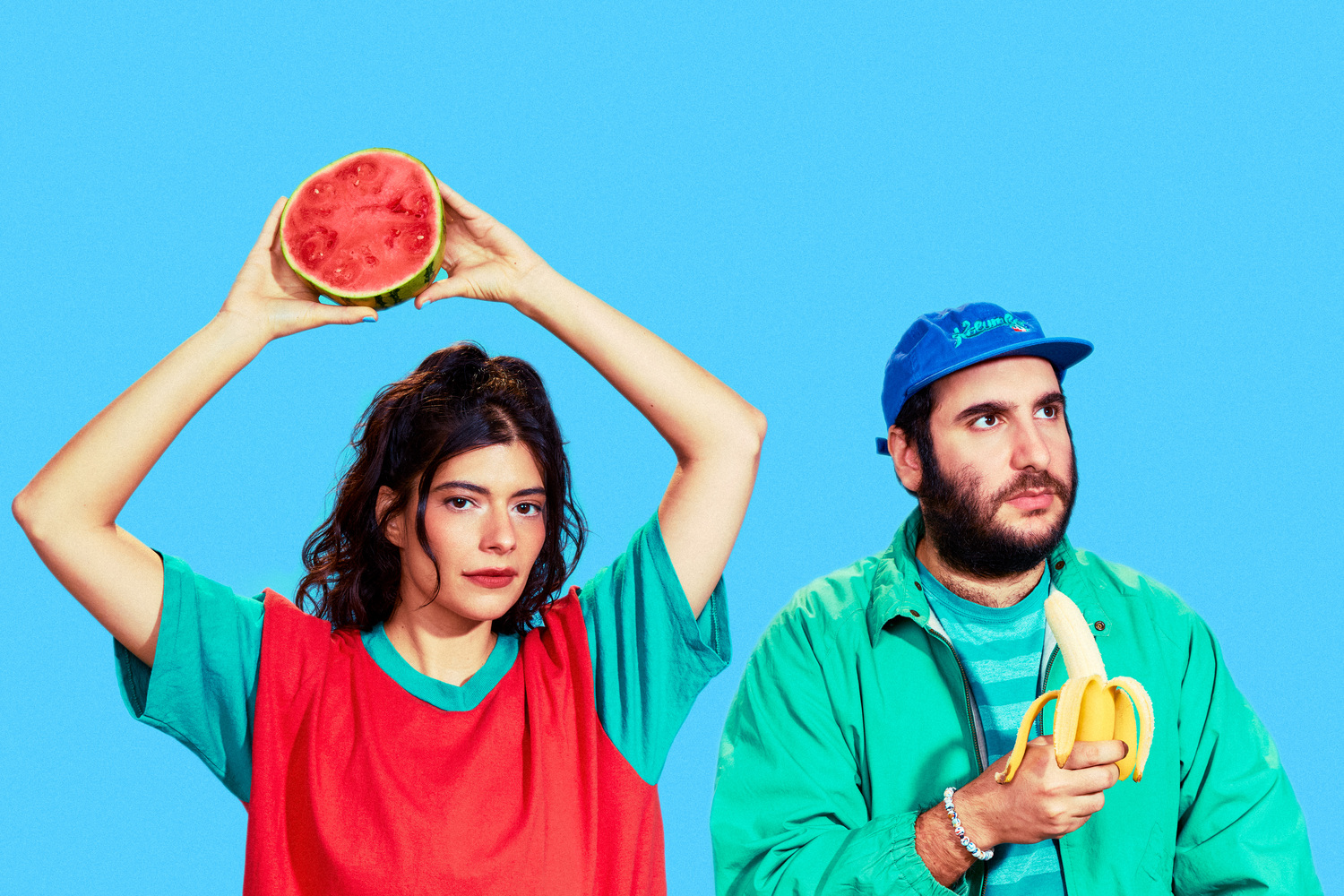
Pearl & The Oysters, the duo of Juliette Pearl Davis (Juju) and Joachim Polack (Jojo), formed a
decade ago in Paris, where they lived until they were young adults. Together, they make music a lot
like their current base of Los Angeles: sunny on the surface, darker and more layered at its roots.
Their fizzy, squiggly lounge pop – now leaning toward ‘70s piano rock as well as Brazilian, exotica
and city pop influences – asks how to live with uncertainty and disquiet.
In January 2025, as Trump’s second inauguration loomed and wildfires raged through LA, Juju
stayed up all night crying. The next morning, she woke to find that Jojo had written a song for her,
“Wide Awake,” a calm offering in the midst of panic. From that moment, the process of creating
Monkey Mind began.
Pearl & The Oysters’ new album Monkey Mind takes its title from the Buddhist concept of a restless,
looping consciousness: thoughts jumping, spiraling and rarely settling. Produced by Jonathan Rado
(Weyes Blood, The Lemon Twigs, Father John Misty), the record follows that cycle across the span
of a day, beginning in a state of calm before the mind wakes up, gathers speed, and eventually
softens again.
Following a “primal and direct” instinct rather than retreating into long, meticulous processes, Juju
and Jojo chose to work quickly, writing their sixth album in a matter of weeks. “We felt a need to tap
into a certain urgency and honesty, as a result of our growing malaise with a cultural climate
plagued by digital alienation and generative AI slop,” says the duo.
Using the 24-hour framework as a creative constraint, the record opens with Randy Newman-like
piano, peaceful and half-asleep, before the energy shifts to the fidgety yacht rock guitar of
“Mandarin Moon”, fast-paced instrumental “Shinkansen”, and the frantic ‘70s funk of “Stratford & 52”
– the street the duo lived on when they first moved to LA. At the center is Juju and Jojo’s long-
standing relationship: on “A Pocket Symphony,” they look back to their creative and romantic
partnership, which began in high school.
Juju and Jojo’s eco-anxieties came into immediate focus as they worked on Monkey Mind. LA’s
wildfires threatened not just the city but the network of friends and collaborators they had built
around them. At the same time, that community, a circle of LA musicians who appear across the
album, helped to ground them. The record recognizes both sides of that experience: fear of loss,
and relief at not being alone.
After years of building intricate, home-recorded worlds, for their new album, Juju and Jojo wanted to
open the process up and capture something less controlled. Sharing similar “musical obsessions”
including Todd Rundgren, The Beach Boys, Steely Dan, and “early-tronic sonorities”, they knew
Jonathan Rado would be the perfect fit. Recording to tape with minimal overdubs meant they could
take a “no-demo, no-click, live-to-tape approach,” which mirrored the rawness and immediacy of the
writing process. “Every day felt like summer camp,” says Juju. The environment was playful and
freeing, and aside from one time when Rado’s poodles got into a stash of Kinder chocolate, the
sessions “were all joy,” says Jojo.
Monkey Mind is Pearl & The Oysters’ first truly LA record. If earlier albums evoked the humidity of
Gainesville, Florida, and their Stones Throw albums Coast 2 Coast and Planet Pearl cast them as
nomads figuring out where to call home, Monkey Mind is firmly rooted in LA. It’s full of poolside
bops, sirens in the distance, the squawks of a neighbourhood parrot, psychedelic ice-cream trucks,
and helicopters overhead. Both an urgent document of its time and “kind of like a giant hug”,
Monkey Mind sees Pearl