June 22, 2026
Doors: 7:00 PM - Show: 8:00 PM
18+
(18+) Widowspeak w/ Thomas Dollbaum
The Pour House Music Hall & Record Shop
224 S Blount St, Raleigh, NC, 27601
Date & Time
Monday, June 22, 2026
8:00 PM
Location
The Pour House Music Hall & Record Shop
224 S Blount St, Raleigh, NC, 27601
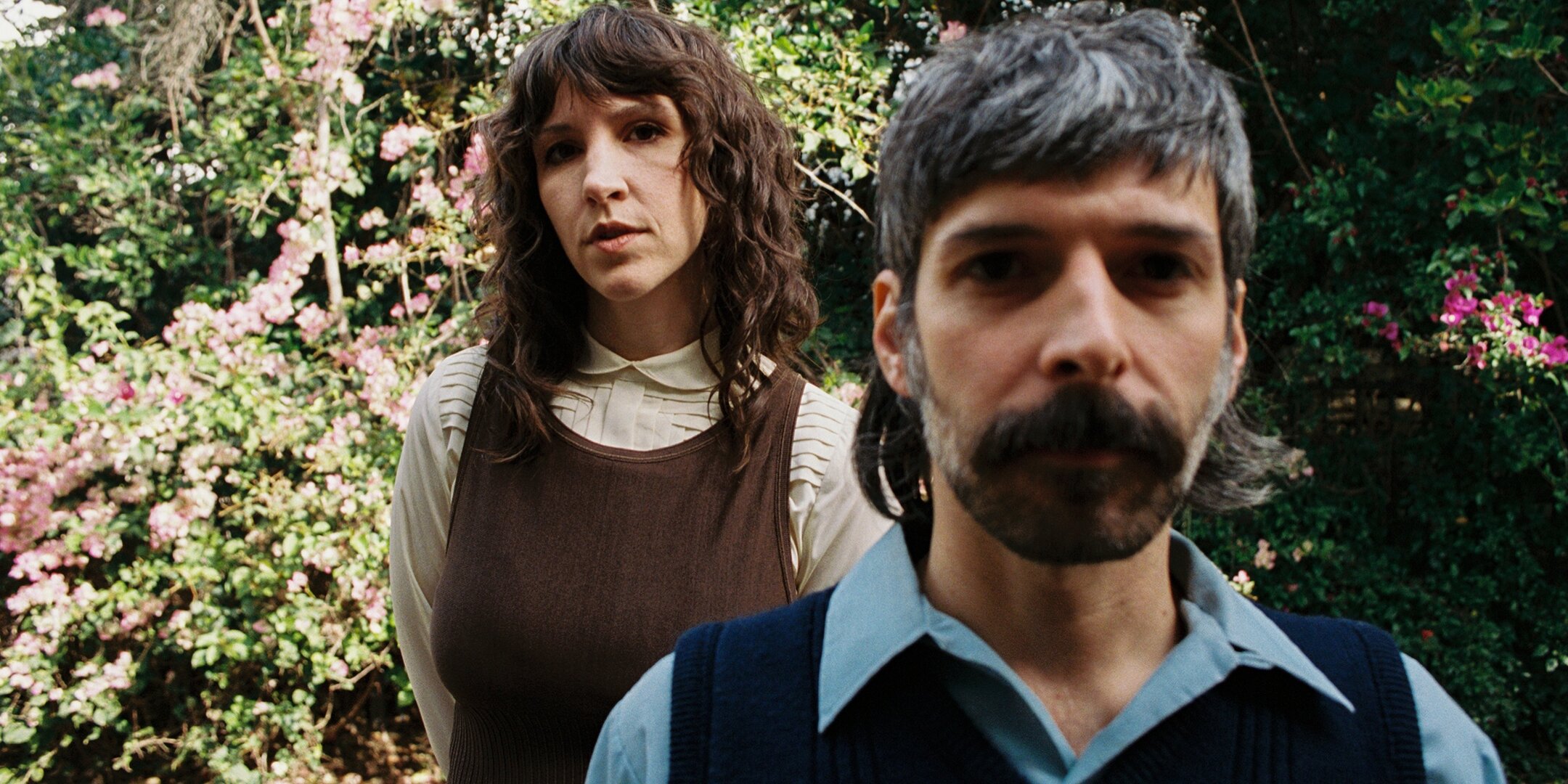
Widowspeak:
An album called “Roses” would be concerned with romantic gestures. Across the ten tracks that make up the seventh and newest Widowspeak record, intimate spaces and stages of love are captured with a nostalgic, vaseline-coated lens. Candles burn inside red glass as lovers get close in a leather booth. Celebrity headshots gaze down like angels in a restaurant. Elsewhere, carnations are pressed in a black book and dancers pull each other close. Widowspeak is a band that riffs on big emotions without being too self-serious. The sweetness, even silliness, of an extended limerent phase that becomes as all-consuming as a pulpy trade paperback. Cars and their drivers serve as a way to talk about codependency. And old love gets worn in, soft as an old t-shirt. If music can simultaneously be naturalistic and noir, saturated and lush, that is Widowspeak. They’re a band that knows how to set a scene.
These songs use intimate moments to talk about deeper heartaches: the restlessness inherent in modern existence, waiting around for something to happen. Or, feeling at odds with playing a role in your own life. “Roses” might be the most romantic Widowspeak record, but it’s also the most deeply realist: the stage is set not with dramatic overtures but the backdrop of the minutiae and repetition of daily acts. Small observations before, during, and after work: the ritual of pouring water for customers, catching a cold on your day off. Daydreaming about winning the lottery, or maybe realizing you already won. Here, love is a way to talk about what drives us, and Widowspeak suggest it can be the whole point. The light that illuminates the dark corners of a day, a life. A reason to keep going despite the pain it can cause. As the title track goes: Not all thorns will prick you, you still feel the first. And now you don’t grow roses because the one still hurts… I want to be the one.
Widowspeak are one of the most prolific and hardworking bands going, bubbling just under the surface. Molly Hamilton and Robert Earl Thomas are the core of the group and its songwriters, and they have honed their sound across sixteen years and an impressively consistent catalog. A lot has happened in that time: for them, for everyone. One of many bands to crop up in a fertile New York City music scene, they started out shuffling gear between venues now-since shuttered (Glasslands, Cake Shop, 285 Kent, Death By Audio to name a few) and their practice space in Monster Island Basement (now a Trader Joe’s). The highs and lows of a long career mean chaotic stints as road dogs traipsing across North America, fly-in gigs to São Paulo or Guadalajara, wrapping seven-week European tours… And then down-time of years in between, considering the power of slowly building a body of work. Widowspeak is now a married couple, working day jobs in their own off-season. Robert is a carpenter, Molly a waitress.
Maybe time has given Widowspeak the ability to grow slowly; “Roses” is unpruned and more beautiful for it; left a little wild as it stretches its new growth in all directions. From the opening chords of “The Hook” you can hear how far they’ve come: the road is open, the sky clears. The band feels at ease, and taking their time. They recorded the album last January at the Old Carpet Factory on the Greek island Hydra: a studio in an old house tucked into the village’s steep hills. It’s quiet there in winter, when the tourists have all gone home. Longtime touring members Willy Muse, John Andrews, and Noah Bond serve here as the players. “Roses” was then taken home and slowly, lightly tinkered with, before being deftly mixed by Alex Farrar at Drop of Sun Studios, and mastered by Greg Obis at Chicago Mastering.
“Roses” is Widowspeak at its best, drawing on forever influences. There’s dream and power pop, a little Stones, maybe some Petty, open and languid ballads with the twang of a Lynchian roadhouse band… Perhaps you hear REM, Yo La Tengo or Cat Power. A little Neil Young in Hamilton’s references to working at the diner. The magic of the band is, still and always, the interplay between Molly and Robert in their two leading roles: her languid, textured voice and his visceral guitar playing. And as producer, Robert captures the ephemeral magic of a band finding a song in the studio: something that still bears traces of the directness of Molly’s voice memos and the dense guitar tapestries of the demos. The rough-hewn marks of the tools are still evident, the noise kept in.
“Can’t hold too tight or I’ll have nothing, Like a candy melts in your hand.” As the album closer “Hourglass” contemplates the fleeting nature of something, anything, it illustrates what is most true about Widowspeak. At the heart of it, their music is special because it is real: most of all for the people making it. Fragile and temporary, and worthwhile… like love itself.
Thomas Dollbaum:
The realest-deal storyteller in indie-rock today is the Tampa-born, New Orleans-based
singer/songwriter Thomas Dollbaum, and Birds of Paradise is his most powerful and dynamic
work yet. Following up his critically acclaimed Wellswood (Big Legal Mess, 2022) and Drive All
Night EP (Dear Life Records, 2025), Birds of Paradise is a goodbye letter to lost loved ones and
former selves. These songs find Dollbaum searching for acceptance in the transient in-between
places: Florida’s pine flatwoods, backroads leading to 1-95, where birds fly across the water.
And even though the ghosts of his alt-county predecessors Townes and Molina are definitely
present, on Birds of Paradise, Dollbaum emerges from their shadows–waving to the past,
sounding all the more like himself.
This moment–this album–is long overdue. Both of Dollbaum’s previous releases had taken way
too long to record, due to circumstances out of his control, leaving him frustrated. And after
having been away from his home for eight years, the place he had left was no longer the place he
remembered, and the unchanging of the natural world felt like a constant he wanted to write
about. With a sense of immediacy, he wrote Birds of Paradise in three months. Called up the
musicians he trusted and admired the most–Nick Corson, Josh Halper, and Jake Lenderman–and
asked them to meet him at Dial Back Sound in Water Valley, Mississippi with producer/engineer
Clay Jones. They learned and tracked the album in four days, capturing lightning in a bottle, a
sonic revelation Dollbaum’s writing has always been waiting for.
“Big Boi” recounts the time high school-aged Thomas got roped into giving a couple (outside the
Waffle House) a ride to pick up drugs at a pill mill. At a time in indie-rock when many
singer-songwriters like to proclaim they’re Southern, Dollbaum knows it’s more complicated
than that. “One day I'll take you down to a place that you can never get out/ Couple splinters in
the wall, nothing to brag about,” he sings steady and direct after realizing the mess he’s in. It
brings to mind the short story “Samaritans” by Larry Brown, where the narrator is tormented for
having a helping heart. Like Brown, Dollbaum miraculously examines entrapment with
generosity.
“Pulverize,” the album’s hardest and darkest rocker, is sorta like another short story, “Time and
Again,” by Breece D’J Pancake. Both song and story are told from the point of view of a man
plowing down the road, picking up strangers, trying to forget real awful things they can’t
mention. Dollbaum was inspired by the time he tried to drive across Louisiana overnight but
then, halfway, decided to turn around. In “Pulverize,” Dollbaum’s narrator is too afraid to look
back. “You should have seen me/ out of Texas in the high moon/ Playing with God riding across
the border cooped up/ in a hoopty to the promised land,” he struts. Lenderman harmonizes with
Dollbaum on the chorus, “Pulverize this heart.” Dollbaum sings the next line alone, slinging his
voice the highest it’ll be the whole album: “I don’t even need it.” And by the end of the song,
he’s screaming with an intensity we’ve never heard before: “It’s fine, it’s fine, it’s FINE.”
But it ain’t just grown men trying to move on in Birds of Paradise. “King’s Landing” playfully
frolics from the point of view of little-kid-Dollbaum growing up near a little private airport. And
he’s got big dreams of flying him and his folks outta there. “I wish I could take us from this
town,” he sings. But knowing this dream is “probably a waste of time,” he suggests going home
and watching “Judge Joe Brown/ And reruns of Cops episodes in our home town.” “I hope we
catch one where the bad guy gets away,” Dollbaum offers some optimism, “Maybe he’ll steal a
small plane/ Fly off to the everglades/ Build us a home out of water and snakes.” When there’s
nothing else, survival and imagination are the same thing.
With the help of Lenderman, Halper, Corson, and Jones, Birds of Paradise is Dollbaum’s
hard-won breakthrough. Alive and echoing like the poems and short stories you can’t shake:
coyotes howl, birds fly south, kids chase rabbits through the sugar cane, and cigarettes are four
dollars a pack. Birds of Paradise reminds us where we come from–the things inside ourselves
we’ve forgotten–we just needed Dollbaum to show us. Here’s how to look back without fear or
shame. Here’s authenticity.